
Nine obstacles Yorkshire Evening Post readers want removed for ‘safer’ pedestrian access in Leeds

From inadvertent e-bike racetracks to ‘death traps’ while walking, here’s what Yorkshire Evening Post readers want changing for better pedestrian access in the city.
Leeds City Council has recently put forward ambitious plans to make the city centre a haven for pedestrians, with a specific focus on protecting the elderly and those with disabilities.
However, for the people who actually navigate these streets every day, the gap between "policy" and "pavement" feels wider than ever.
When asked what truly needs to change to make the city safer, the response from locals was as blunt as it was diverse, ranging from a desperate need for basic maintenance to a total rethink of modern infrastructure.
We asked readers of the Yorkshire Evening Post on our Facebook page what changes they would like to see for safer pedestrian access in the city, and the response was huge; it felt as though almost everyone had an issue that needed to be addressed.
Looking through the hundreds of comments, nine commonly referred to problems cropped up more often than not. With that in mind, here’s what Leeds locals want to see happen for the city to truly become a ‘haven’ for pedestrians.
Nine obstacles Yorkshire Evening Post readers want removed for a ‘safer’ pedestrian access
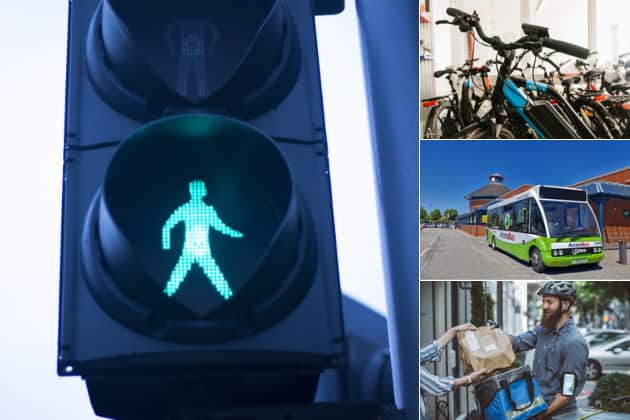

1 - The end of the Briggate 'racetrack'
The most visceral fear for many Leeds shoppers is the ‘silent threat’ of high-speed delivery riders and e-bikes in pedestrianised zones.
Residents argue that Briggate, once a sanctuary from city traffic, now feels more dangerous than a standard road because vehicles are moving at speed without any engine noise to warn walkers.
There is a loud call for the council to move beyond simply having a ‘ban’ on the books and actually enforce it, with some residents pointing out that, at least with cars and buses, you knew exactly where the danger was coming from.
2 - Eliminating the 'lethal' rocking flagstones
Safety isn't just about what is moving around you, but what is happening beneath your feet.
A significant number of locals described the city centre pavements as a "death trap," particularly for those with visual impairments or mobility issues. The demand here is for a massive investment in basic repair work to fix uneven, broken, and "rocking" flagstones that can tip up when stepped on.
For wheelchair users and those with prosthetics, these aren't just minor inconveniences; they represent a fundamental barrier that makes the city centre feel entirely unsuitable for their needs.
3 - A rethink of the 'bus stop leap of faith'
One of the most controversial pieces of recent infrastructure in Leeds is the ‘floating’ bus stop, where a cycle lane runs between the pavement and the bus itself.
Pedestrians want to see this design scrapped or significantly altered, as they currently feel forced to take a "leap of faith" into a live bike lane when disembarking. Many argue that forcing a person to look both ways just to step off a public bus is a design flaw that prioritises cyclists over the safety of the city’s most vulnerable walkers.
4 - Enforcing suburban hedge-trimming
The pedestrian safety debate often focuses on City Square, but residents in outlying areas want the council to remember the suburbs.
A major concern is the lack of enforcement regarding overgrown hedges in residential areas, which frequently block the entire width of the footpath. Locals are calling for stricter inspections and orders for homeowners to cut back their greenery, ensuring that parents with prams and the elderly aren't forced to step into the road just to get past a poorly maintained garden.
5 - Fixing the timing of the 'invisible' green man
Frustration is boiling over regarding the state of Leeds’ pelican crossings...
Many pedestrians find themselves standing on corners for several minutes, often during "all-red" phases where no traffic is moving, yet the green man remains invisible. This leads to people "making a dash for it" out of sheer impatience.
The public wants a more intelligent, responsive crossing system where pedestrians can actually see the signal clearly and aren't left waiting while the road sits empty.
6 - Plugging the 'mass transit' hole
There is a lingering sense of resentment that Leeds remains the largest city in Europe without a mass transit system, like a tram or a metro.
Residents argue that making the city safer for pedestrians is impossible as long as thousands of cars are forced into the centre due to an "unreliable" and "expensive" bus network. The call here is for a long-term commitment to a tram system that would fundamentally reduce the volume of vehicles on the road, making the entire urban core naturally safer for those on foot.
7 - Protecting Blue Badge and disabled access
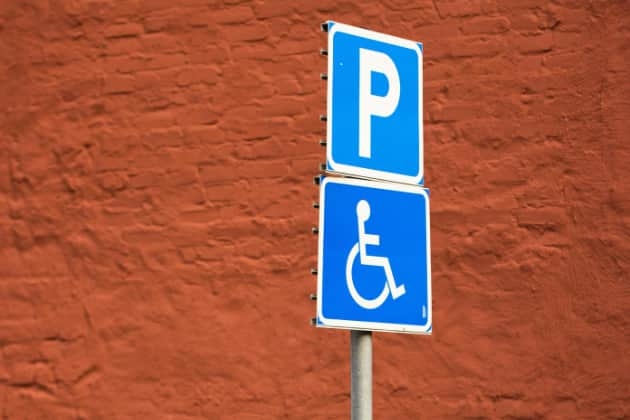
Safety for disabled pedestrians isn't just about the pavement; it's about being able to get close enough to the destination in the first place.
There is a growing demand for more disabled parking spaces and a total crackdown on drivers who park across dropped curbs. For many in the disabled community, the removal of cars from the city centre has actually made them feel less safe because they are now forced to walk—or wheel—much further distances on treacherous, uneven surfaces.
8 - Tackling the Briggate 'atmosphere'
For some, safety is a matter of policing rather than paving. Locals have pointed to specific hotspots, like the area around the Briggate, as places where anti-social behaviour and rubbish make pedestrians feel vulnerable, especially after dark.
The demand is for a more visible police or warden presence to clamp down on aggressive behaviour, ensuring that the city centre feels like a welcoming community space rather than a place to be avoided.
9 - A modern return to the Green Cross Code
Finally, there is a strong argument from the public that safety is a two-way street. Many residents believe that pedestrians themselves need to take more responsibility, particularly regarding the ‘phone-scrolling’ epidemic.
There is a nostalgic but firm call to bring back public information campaigns similar to the ‘Tufty’ or ‘Green Cross Code’ films of the past. The goal would be to remind a new generation of the importance of being aware of their surroundings, rather than crossing busy junctions while wearing headphones or looking at a screen.