
National Old Stuff Day: Why my ‘old obsolete stuff’ is getting reappraised by Gen Z

As an elder millennial turning 40 and a few years more in 2026, I’ve spent the last decade apologising for the junk in my spare room - junk I dared to move with me to a new home.
Every time I lugged a heavy box of CD jewel cases or a ‘spares’ bag of chargers and cables across a threshold, I felt the silent judgment of a world that had moved to the Cloud.
Why keep the physical when the digital is infinite - and did I really refer to myself as an ‘elder Millennial’?
But as National Old Stuff Day rolls around today for its 2026 iteration, the joke is on the minimalists and those who questioned my allegiance to some ‘dead tech.’
My ‘obsolete’ clutter has become something that a younger generation is currently gravitating towards, in an effort to escape the very ‘future’ we were told to embrace.
The most fascinating part of this reappraisal is that it’s being led by a generation that never knew the ‘frustration’ of our older generation’s technological advances.
To us, waiting for a CD to skip or a camera to write to a slow SD card was a limitation to be overcome. To Gen Z, that ‘friction’ is the point.


They are consciously trying to uncouple their lives from the ‘all-in-one’ tyranny of the smartphone, and another form of ‘Going Analogue’ without the extreme of eschewing devices entirely.
Instead, they are looking for ways to bring a sense of urgency and ceremony back to their downtime; capturing a "perfect moment" on a 2005 DigiCam feels like a tactile win, rather than just more fuel to keep the content algorithms afloat.
By using ‘old’ tech, Gen Z is reclaiming intentionality; they aren't going ‘dark’ or moving to a cabin in the woods; they are simply decompartmentalising their lives.
What I once viewed as a ‘junk drawer' of obsolete failures is now being reappraised as a collection of sanctuary-grade hardware.
If you’re like me and still have these five specific relics tucked away, congratulations: you aren't a hoarder, you're just astute about technology being, much like pop culture, cyclical.
Five old tech items worth keeping in 2026
The MiniDisc
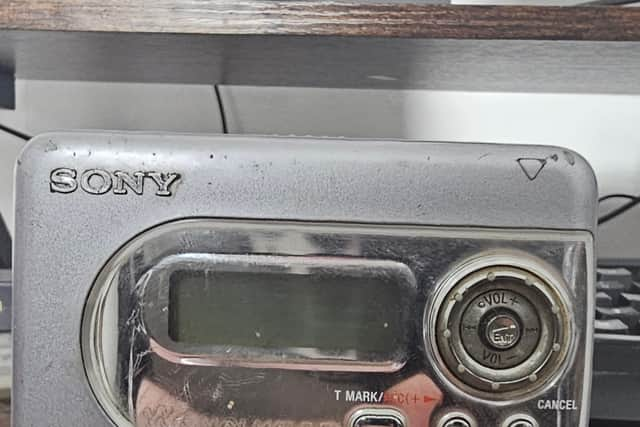
What I once viewed as the most niche failure in my junk drawer has become the ultimate status symbol for a generation seeking a specific ‘Cyberpunk’ aesthetic.
The MiniDisc is currently enjoying a high-end resurgence, driven by its unique position as a digital format that feels entirely tangible. Since Sony officially ceased production of blank discs in early 2025, the secondary market has reached a fever pitch.
Today, a working portable recorder like the Sony MZ-N710 can regularly fetch between £150 and £250 on eBay, while professional-grade decks are being treated as audiophile investments, often trading for upwards of £500.
For Gen Z, the appeal lies in the tactile click-clack of the shutter and the physical ceremony of custom-labelling a disc; a ritual that makes music feel like a private event again rather than just background data for an algorithm.
The CD
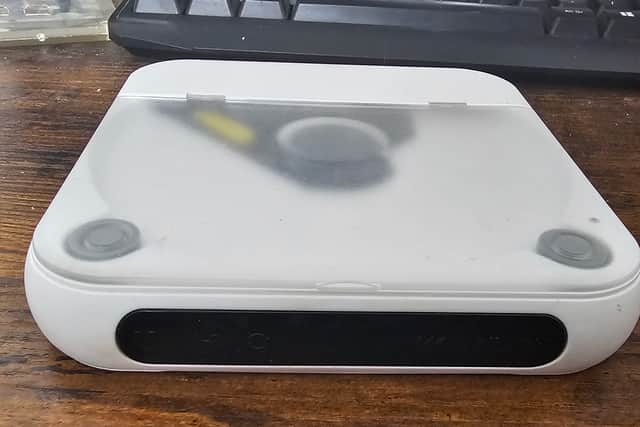
The compact disc spent years as the awkward middle child of media; not as "cool" as vinyl, yet not as convenient as Spotify.
However, in 2026, the silver disc has officially flipped the script.
According to recent retail data, demand for CD players has surged by 74% over the last twelve months, spurred on by ‘deluxe’ physical releases from major artists like Taylor Swift. In a massive demographic shift, Gen Z actually bought more physical CDs last year than Millennials or Gen X, viewing the format as a masterclass in ‘Data Sovereignty.’
In an era where streaming services can remove an entire album overnight due to licensing rows, owning the physical disc is the only way to ensure your library is truly yours. At £10-£12 an album, it’s also a fraction of the price of vinyl, making ‘intentional listening’ affordable for a younger generation revolting against the subscription economy - and the perfect treasure hunt across the charity shops Leeds has to offer.
The iPod
The device that once killed the CD has now become its closest partner in the ‘Analogue 2026’ movement.
Search interest for the iPod Classic and Nano has hit levels not seen since the late 2000s, with Google Trends recording a search relevance score of 97/100 recently. This craze is fuelled by a desire for single-purpose technology; younger users are moving away from the all-in-one distraction of the smartphone in favour of a device that does exactly one thing well.
Refurbished sales have seen annual growth of 15%, often serving as a sanctuary-grade tool for students navigating new phone bans in schools. To listen to an iPod is to enjoy a notification-free zone where no WhatsApp ping or banner ad can interrupt the music.
The 2005 DigiCam
That 5-megapixel point-and-shoot I nearly binned in a 2019 decluttering spree is currently the most wanted fashion accessory in Leeds.
The ‘DigiCam’ trend has become so dominant that it has driven a staggering 979% spike in demand for vintage hardware, including older smartphones like the iPhone 4, purely to be used as standalone cameras.
Gen Z is starting to reject the ‘too-perfect’ look of AI-enhanced smartphone photos that smooth skin and balance light until every image looks the same.
They are instead gravitating toward the honest imperfection of 2005-era CCD sensors, embracing the grain, the over-exposed flash, and the slight blur that feels like a real memory. In a world of infinite cloud storage, the "friction" of a limited memory card and a finite battery makes every click of the shutter feel urgent and meaningful.
The PlayStation 2
The PlayStation 2 has transitioned from being a retro relic into a genuine mental health tool for the modern age.
As the global retro gaming market climbs toward a $4.18 billion valuation this year, the PS2 remains the gold standard for intentional gaming. While modern titles are plagued by 50GB updates, micro-transactions, and always-on internet requirements, the PS2 represents a Post-Internet safe space.
It is a finite, completed experience; you put the disc in, and the game works. For a generation raised on the never-ending treadmill of "battle passes" and live-service updates, the PS2 offers a sanctuary where they can't be tracked, updated, or sold to.
It turns gaming back into a social, physical activity centred around a wired controller and a sense of completion.