
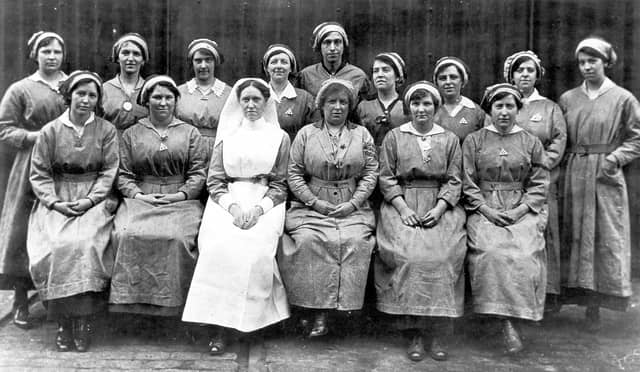


They were the ‘Barnbow Lasses’, female workers who filled shells and produced explosives at the Barnbow Munitions Factory on Manston Lane during the First World War. The factory opened in December 1915 for the production of shells for use by the troops and continued without stoppages until November 11, 1918, when the war ended. 16,000 people - 93 per cent of which were women as most of the men were away at war - were employed there at the peak of its production. The work was extremely hazardous with three fatal explosions taking place including one in 1916 which killed 35 women. Exposure to dangerous chemicals left many women with skin and hair turning yellow, leading to them being dubbed the ’Barnbow Canaries’. This gallery of more than 20 photos takes you inside the factory and showcases the hard work, dedication and contribution made by those who worked at the site. The images are published courtesy of photographic archive Leodis, which is run by Leeds Library & Information Service. READ MORE: Leeds Pals - The story of the soldiers who made the ultimate sacrifice LOVE LEEDS? LOVE NOSTALGIA? Join Leeds Retro on facebook YEP RETRO NEWSLETTER: Sign up for our free monthly email digest of Leeds nostalgia
19. Barnbow Lasses
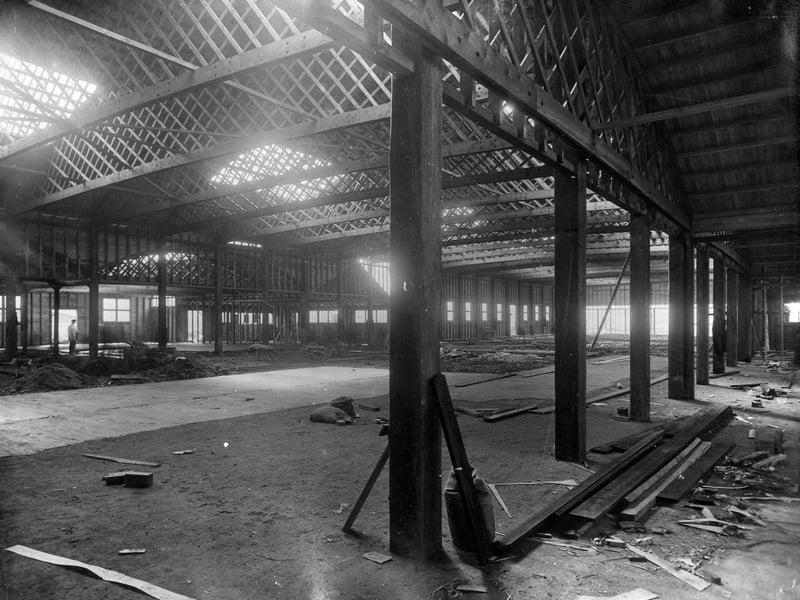
Inside the Box Factory building in April 1916 taken during its construction. The factory, used for the manufacture and repair of gun ammunition boxes, was up and running in the first week of June, with the box- making apparatus consisting of the most modern tools upon the market at the time. | Leeds Libraries, www.leodis.net Photo: Leeds Libraries, www.leodis.net
20. Barnbow Lasses
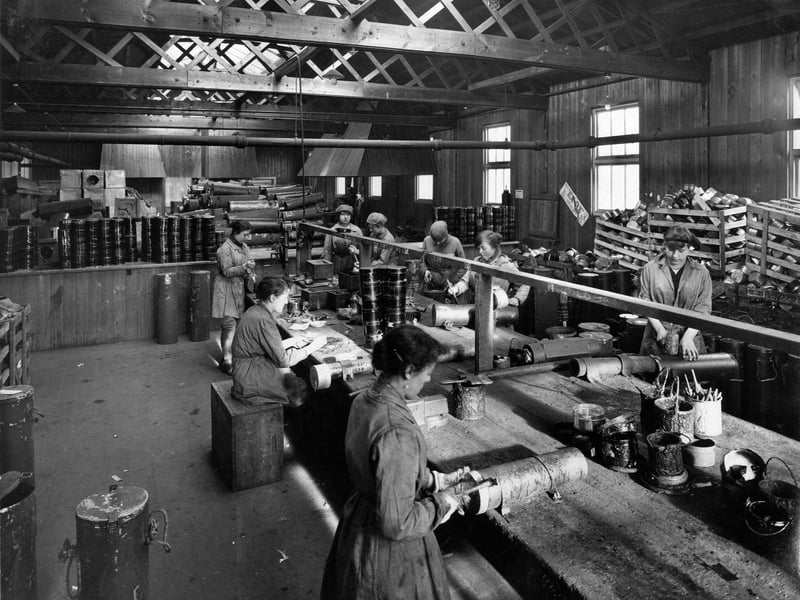
A view of the shop used for the renovating of cartridge cylinders and tins. With an average total of 450,000 of all types of cartridge cases and packing cylinders handled every week, the need for a specialised department to rectify damage sustained in transport or remedy slight deflects was paramount. | Leeds Libraries, www.leodis.net Photo: Leeds Libraries, www.leodis.net
21. Barnbow Lasses
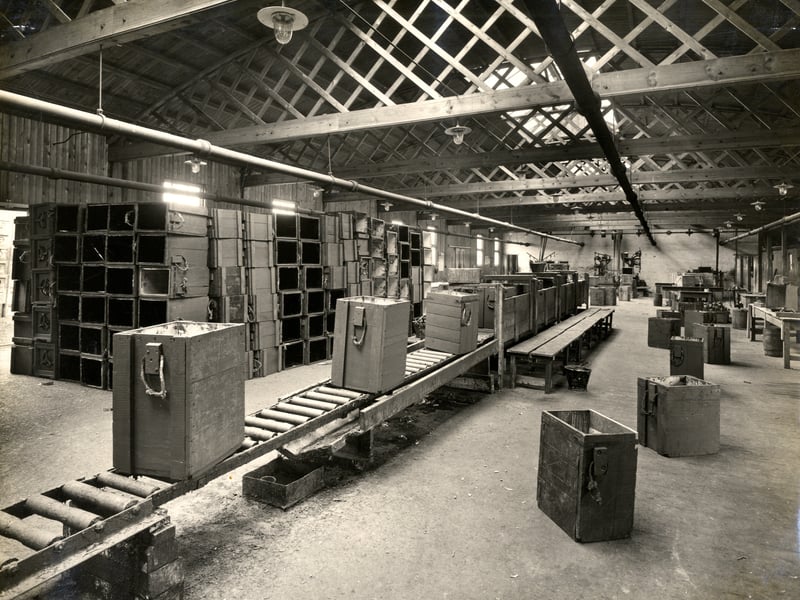
Inside the Box Converting Store pictured circa 1916 to 1918. Attention was given to reusing as much as possible of the material that passed through the factory and to this end empty propellant boxes were converted into packing cases for the finished product. An average of 5,000 cases per week were converted, with the work being carried out entirely by female labour. The image shows the finishing and assembling department of the Box Converting Stores, in which a number of the finished cases can be seen. | Leeds Libraries, www.leodis.net Photo: Leeds Libraries, www.leodis.net
22. Barnbow Lasses
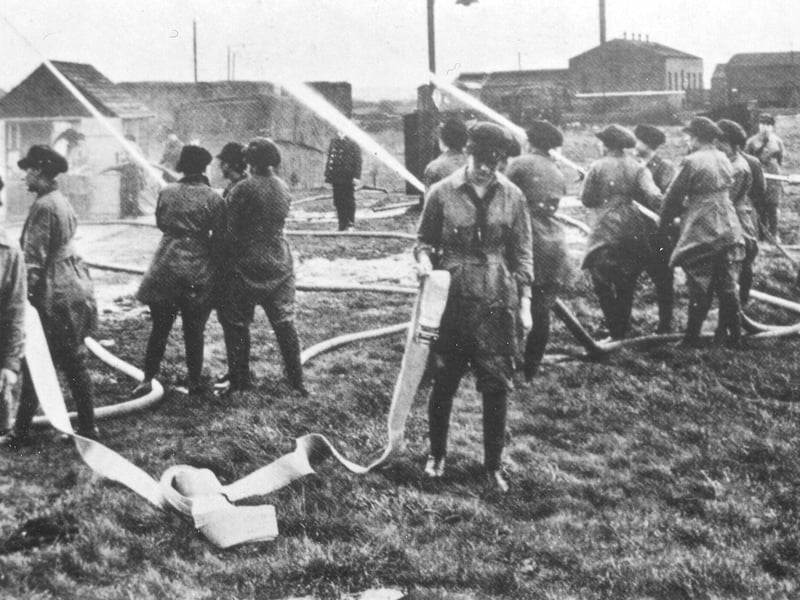
Women taking part in a fire practice. Though health and safety practices were in place, as seen here, in such a highly dangerous atmosphere some accidents could not be prevented and three fatal explosions took place. | Leeds Libraries, www.leodis.net Photo: Leeds Libraries, www.leodis.net
23. Barnbow Lasses
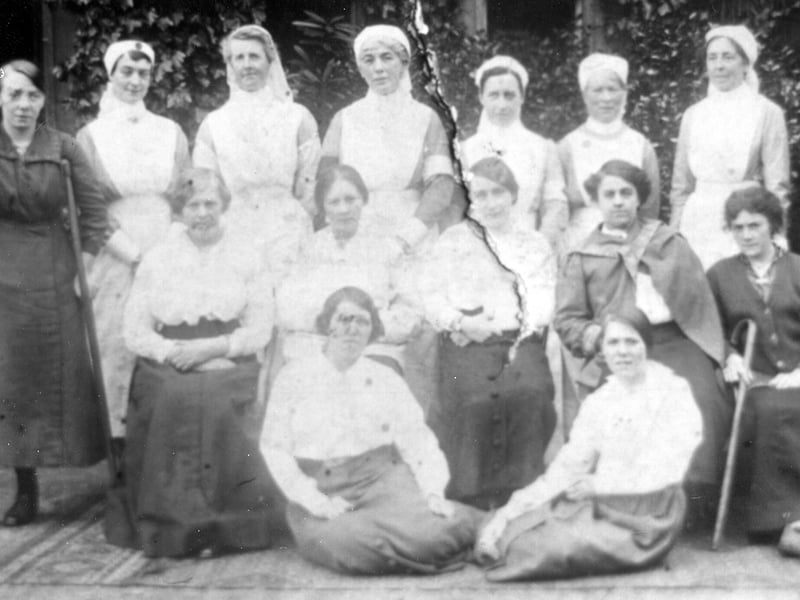
A group of injured women, and the nurses caring for them, following an explosion which took place at the facgtory on December 5, 1916. These were the lucky ones as 26 of their colleagues were killed in the accident with a further 9 dying in the following days. | Leeds Libraries, www.leodis.net Photo: Leeds Libraries, www.leodis.net
24. Barnbow Lasses
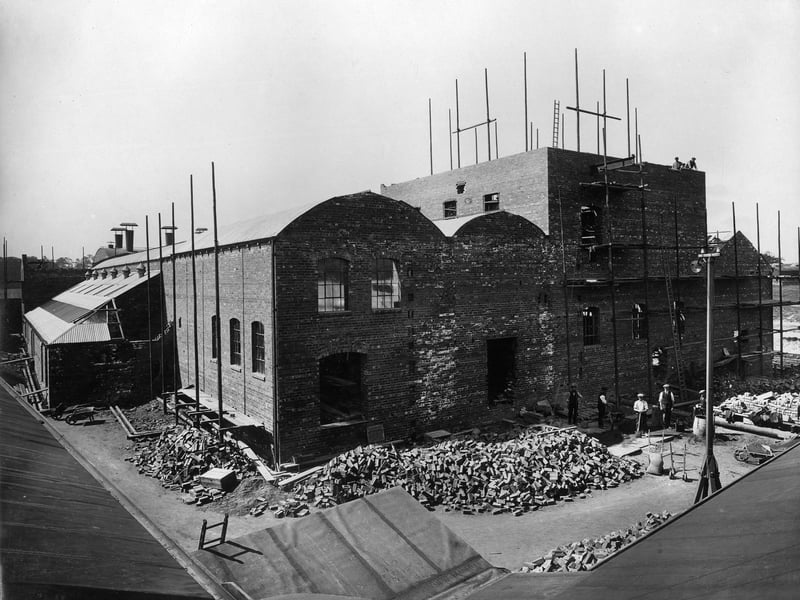
The Hot Mixed Extension building pictured in June 1918. This was built in 1918 to incorporate a new and more efficient process of shell filling. Once it was fully operational in the early part of August, the output of shells increased rapidly. | Leeds Libraries, www.leodis.net Photo: Leeds Libraries, www.leodis.net