
EES rules explained: Holiday warning after major EU travel rule change - with Brits already left stranded
If you are flying to Europe this summer, the security process will look very different.
European border authorities are being urged to use flexibilities allowed under new rules after more than 100 easyJet passengers missed a flight in Italy.
Tourists who are jetting off to Europe are being warned that new travel rules have come into force and will make journeys look quite a bit different. It includes having to have their fingerprints and photograph taken.
The EU has further rolled out its new EES border rules. But what does it mean for holidaymakers this summer?
What does EES mean?
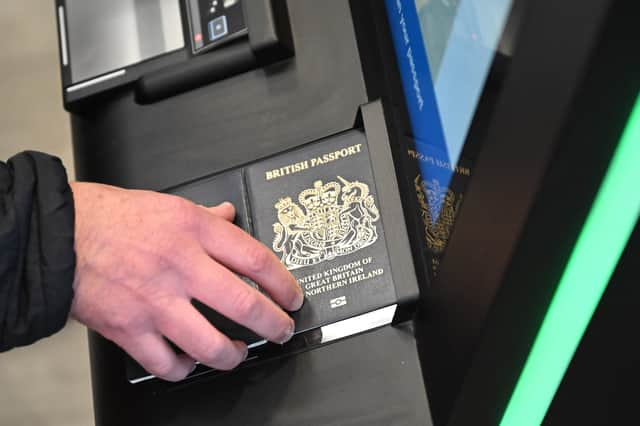

The EU’s Entry Exist System (EES) is a new digital border system and impacts Brits who are travelling to Europe. First rolled out last October, the checks have started to come into widespread use in recent weeks and have resulted in travel chaos in places.
Over the weekend, more than 100 passengers were reportedly unable to board the flight from Milan Linate to Manchester on Sunday because of delays at passport desks.
How are the EES travel rules different?
The Entry Exit System (EES) requires non-EU citizens, from third-party countries like the UK, to register at the EU border by scanning their passport and having their fingerprints and photograph taken.
British passport-holders will need to register on their first visit to a country where EES checks are operating. Registration is valid for a rolling three-year period or until the passport expires.
Once the kinks to the system are ironed out, on exit, and for subsequent visits to a participating country, travellers will only need to scan their passport and provide either fingerprints or a photograph at the border.
EES will be a requirement when entering Schengen area countries including Iceland, Liechtenstein, Norway and Switzerland. EES will not be required when travelling to Ireland and Cyprus.
For travellers using the Port of Dover, Eurotunnel at Folkestone or Eurostar at St Pancras International, the process will take place at the border before they leave the UK.
Minister for Border Security and Asylum, Alex Norris, said: "We recognise that EES checks will be a significant change for British travellers, which is why we have worked closely with our European partners to ensure the rollout goes as smoothly as possible.
"The UK and EU have a shared objective of securing our borders and these modernisation measures will help us protect our citizens and prevent illegal migration."
Calls for flexibility with EES rules issued
Enhanced EES checks can be reduced and even deactivated where there is the threat of long queues at passport controls.
But that does not seem to be happening universally, with reports of passengers also missing flights in Faro, Pisa and Venice last weekend because of EES delays.
Representative body Airports Council International recently reported that EES was causing delays of up to three hours, with airports in Spain, Portugal, France and Italy among the worst affected.
Julia Lo Bue-Said, chief executive of Advantage Travel Partnership, a network of independent travel agents, told the Press Association that what happened in Milan is “a warning sign that cannot be ignored”.
She said: “Even isolated incidents at Schengen borders are having serious knock-on effects, with passengers missing flights, facing long waits and navigating processes that are unclear and inconsistent. That is simply not good enough.”
The executive added: “We have consistently called for a pause in EES registration during peak travel periods and at times of high passenger volumes, to minimise disruption and protect the customer experience.”