
'As long as we're allowed': Festival chief Jim King talks future legacy with the inaugural Roundhay Festival

Following its launch at Headrow House, Roundhay Festival mastermind Jim King opens up on chasing the historic spirits of Bruce Springsteen, creating a ‘community within a community’ through radical ticketing, and if the festival is here to stay...
There is an undeniable, sleeping magic buried within the rolling acres of Roundhay Park; for anyone who grew up in West Yorkshire during the halcyon days of the 1980s and 90s, the park isn't simply a sprawling green oasis but a sacred open-air colosseum.
This is the historic ground where 80,000 voices unified under the summer sun, where iconic international legends transformed Leeds into a global epicentre of live music culture.
When festival titan Jim King, CEO of European Festivals at AEG Presents, began looking for a destination capable of hosting a truly world-class, multi-day flagship event, he wasn't just looking at logistics. He was actively chasing the ghosts of rock royalty.
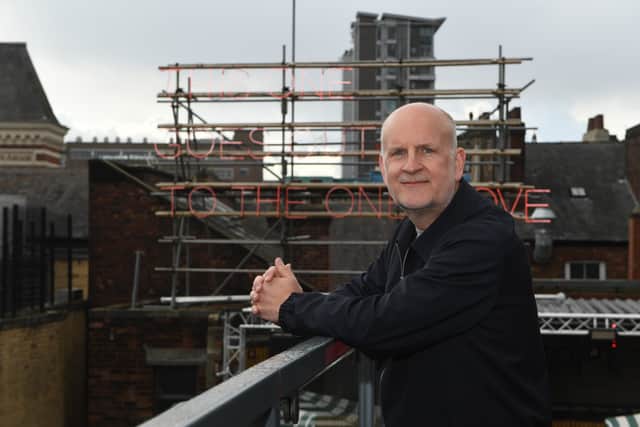
"I've always been a huge fan of music and live shows, as you'd expect, but there is this huge iconography to the place," Jim reflects, in a less-than-hectic moment during the festival’s launch event at Headrow House on Tuesday (June 9).

He continued: "You think of those moments of, you know, Mick Jagger on the stage, and that wall of fans on that natural amphitheatre which you had with Springsteen and all of those other great artists as well.
“It’s always been one of those venues where I look back and think, 'Wow, I kind of missed out not going to that show.'"
For Jim, returning elite-tier live music to this specific natural arena isn't about resetting the clock; it’s about acknowledging that Leeds has always possessed the appetite, the resources, and the civic pride to host the biggest names in the game.
By bringing a stellar contemporary bill featuring global heavyweights like Lewis Capaldi and Pitbull back to the park, the goal is to reignite that unmistakable, optimistic energy that once put the city firmly on the international music map.
Confronting the Cost-of-Living crunch
Yet, resurrecting a legendary stadium-scale environment in 2026 requires navigating an entirely different socio-economic landscape than the eighties.
The modern festival market is plagued by consumer anxiety, with rising ticket prices routinely forcing music lovers to make devastating financial compromises.
Jim is clear about the industry realities and isn't relying on standard corporate platitudes. He and his team have built a ticketing infrastructure from the ground up to create a genuine, protective community within the broader festival crowd.
Highlighting the creative group schemes embedded into the system, Jim believes there are “a great many opportunities and routes for people to be able to come” affordably.
By emphasising collective experience, the strategy ensures that financial barriers don't exclude anyone from this cultural rebirth, empowering fans to act as grassroots advocates for the weekend and removing the traditional commercial divide between promoter and punter.
"You know we want Ambassadors for what we do, which is why the team tickets there we want people to come on multiple days, which is why the 2-day [and] 3-day offer is there as well," Jim states
“We can actually make it as affordable as possible, so they don't have to choose."
That deliberate focus on keeping money in the pockets of festival-goers directly feeds into the broader commercial philosophy of the event; a flagship festival of this magnitude does not exist in a vacuum.
Its financial footprint serves as an industrial-strength economic engine designed to support the host city from the ground up.
"Absolutely, it's one of the founding principles of any event that we do," Jim responds when asked about local economic development. "It's a case of 'how do we leave a positive legacy?' And that's not just on a cultural basis, but from an economic standpoint as well."
For the independent hospitality, retail, and supply sectors across Leeds, the hard data is already speaking for itself.
"Overall, it's millions that have been spent in the live music sector here in Leeds and Yorkshire this year," Jim reveals.
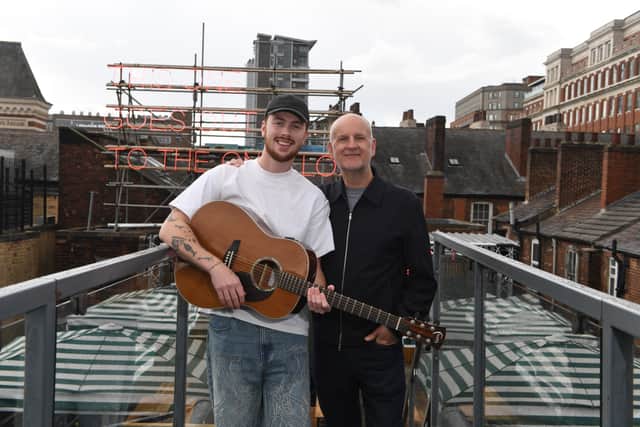
"So it's a good starting point for us to then improve from. What it allows us to do, by being here for more years—next year and following—is use that as a benchmark and grow from it."
Crucially, this isn't a transient roadshow that packs up its profits and leaves.
For AEG Presents, anchoring a major festival in LS8 means establishing permanent, sustained links with the independent businesses and local infrastructure that make the region tick.
"We want local suppliers from the local business community, and then the regional business community, to come on this journey with us. We stay with our supply chain all the way through. I'm still working with many of the suppliers I've been working with for 25 years in London or in other markets.
Pivoting back to his earlier comment about generations, though - does that mean Roundhay Festival is not a one-off and here to stay?
"AEG is known for being long-term investors in music and live events, and especially those events that we originate," Jim explains, praising Leeds City Council for being incredibly forward-thinking and welcoming.
"Our plan is to be here for as long as we're allowed to be here. We're already booking next year."
Roundhay Festival takes place from July 3–5. For more information or to book tickets, visit the official Roundhay Festival website.