
Older than the Charter: The 500-year-old Tudor charity still protecting 500 acres of Leeds today

As Leeds marks 400 years of civic history, one of the city's oldest institutions is quietly preparing for an even bigger milestone
Two days ago, Leeds celebrated a massive milestone: 400 years since King Charles I granted the town its very first Royal Charter on July 13, 1626.
While the city reflects on four centuries of self-governance and growth, one of its most vital civic institutions is quietly preparing for an even older anniversary.
When the Royal Charter was signed, Wade’s Charity was already nearly a century old.
As the charity approaches its 500th anniversary in 2030, its history offers a unique window into how Leeds transformed from a modest Tudor market town into a bustling modern city.
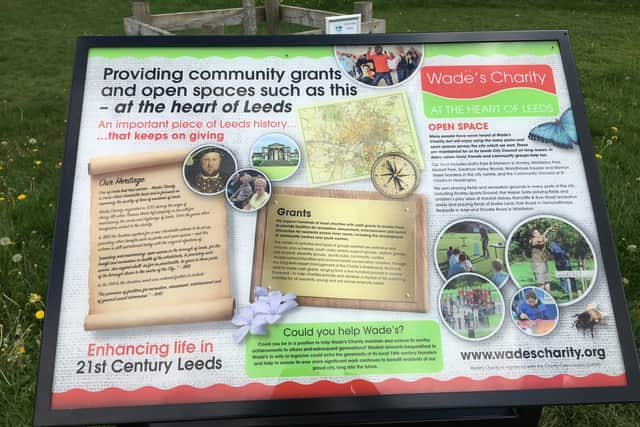

Wade’s Charity began during the reign of Henry VIII: in 1530, a local benefactor named Thomas Wade left a bequest in his will to "remain and go to the use of mending, upholding and keeping of the highways about Leeds".
At the time, Leeds was home to fewer than 3,000 people - a modest market town roughly twice the size of modern-day Masham.
Long before the modern welfare state, Wade's gift established a basic principle of civic responsibility: that local wealth should protect and maintain the shared fabric of the town.
For more than 350 years, the charity focused on Leeds' roads. However, in 1893, the Leeds Corporation took over sole responsibility for the city's highways.
Rather than winding down, the charity pivoted. It took on a new mandate: "providing and maintaining open spaces for the benefit, recreation and health" of Leeds residents.
Protecting the city's lungs
This pivot proved vital.
As Leeds ballooned into an industrial powerhouse of over 400,000 people, overcrowding and pollution became major public health crises.
Access to clean air and green space became a necessity rather than a luxury.
Wade's began acquiring land for parks, securing recreation grounds and woodlands across the expanding city. Today, the charity owns approximately 213 hectares (526 acres) of green space, accounting for roughly 20 per cent of Leeds' public green spaces.
This historic preservation is more critical than ever.
A 2026 report by the Wildlife and Countryside Link warned that England's poorest communities face the deepest cuts to nature and green space under changing planning laws.
Because many of Wade's landholdings are located in or near areas experiencing higher levels of deprivation, the decisions made by trustees generations ago continue to protect families’ access to nature who need it most.
As Leeds looks forward after its 400th charter anniversary, the story of Wade’s Charity serves as a reminder that long-term investment in our shared spaces benefits the city for centuries to come.
For more information on the parks that Wade’s Charity owns, or to apply for one of their grants to help your part of the community, visit the charity’s official website.