
‘Aural sunshine & visual noise’: How neurodivergent composer Nwando Ebizie is reimagining 12th-century mystic

Fusing medieval plainchant, custom synthesisers, and a radical exploration of neurodivergence, artist Nwando Ebizie discusses bringing her multi-sensory opera Ecstasy of the Virtues to the Howard Assembly Room
When 12th-century Benedictine abbess, mystic, and composer Hildegard von Bingen recorded her divine visions, she spoke in vivid terms of "gleaming souls" and "light pouring into light".
Nearly a millennium later, those same descriptions of luminous phenomena resonated with Neurodivergent Afrofuturist artist and composer Nwando Ebizie in a deeply personal way.
Following its world premiere at Stone Nest in London, Nwando’s ground-breaking mystic opera, Ecstasy of the Virtues, arrives at the Howard Assembly Room in Leeds.
Commissioned and produced by Mahogany Opera in partnership with Opera North, the production weaves together medieval theology, neuroscience, custom electronic instruments, and immersive staging to create a performance designed to leave audiences transformed.
Nwando’s journey into the world of Hildegard von Bingen began in 2016 following a life-changing neurological diagnosis.
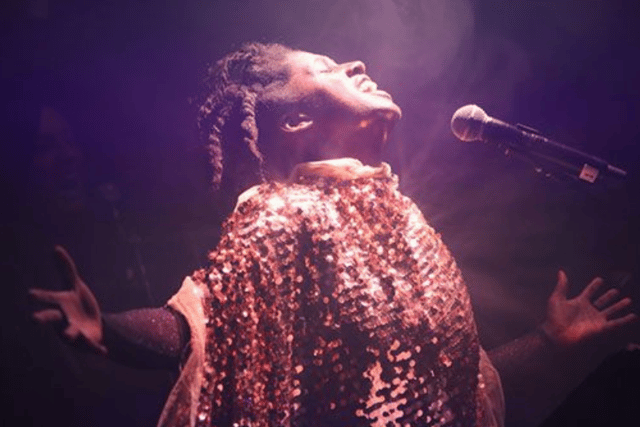

"My interest in Hildegard began when I realised I had a neurological syndrome called Visual Snow Syndrome," Nwando explains to the Yorkshire Evening Post. "Put simply, this means that I experience a different perceptual reality to most people, including a visual field full of translucent pointillist noise, swirling patterns, auras, light halos, and photographic-like afterimages."
Teaming up with neuroscientist Dr Eva Bracey to explore the mechanics of human perception, Nwando found herself constantly returning to historical figures who navigated unique visual worlds.
Hildegard stood out not only as a visionary polymath, but as a woman whose perceptual reality was meticulously preserved in medieval texts and illuminated manuscripts.
Translating those neurological experiences onto the stage required a dedicated technical team and an inventive musical palette.
Projections and lighting effects mimic the starbursts and light halos of Visual Snow Syndrome, while the musical score directly responds to Hildegard’s writings.
"In the third scene of the opera, titled Revelation of the Virtues, I tried to aurally create the sound of heavenly light or sunshine appearing behind clouds or witnessing the perfect sunset—all complete with my way of seeing," says Nwando.
Reclaiming the Shadow: Reframing the Devil
At the core of Ecstasy of the Virtues is a total reimagining of Hildegard's 12th-century morality play, Ordo Virtutum.
In Nwando’s modern libretto, the traditional, non-singing figure of 'The Devil' is transformed into something far more psychological: 'Self-Loathing'.
This reframing stems from Ebizie's exploration of Jungian psychology and the historical impact of colonial Christian missionaries who flattened complex indigenous spiritual traditions.
"I’m interested in how historically Christian missionaries - while converting people around the world - would take their indigenous pantheon of spirits or gods and subsume them into the structures of Christian mythology," Nwando notes. "In my culture, which has a pantheon of nature spirits, there is a horned trickster spirit called Ekwensu.
“The missionaries declared that he was the devil, turning a complex chaos-bringer into a flat idea of evil."
In a key passage of the opera, the allegorical Virtues confront the character of Self-Loathing directly: "You have no depth, no complexity, you are flat / A flat idea of negative space… / Created from a… colonial crisis of our old spirits / Our tricksters, our nature spirits, our horned gods, our graveyard hags, our moon dancers…"
To accompany this thematic journey, Nwando built a genre-defying sonic universe.
Starting with Hildegard’s original melismatic melodies, she experimented with vocalists from diverse cultural and stylistic backgrounds.
The resulting score combines historical folk elements - such as hurdy-gurdys, harps, and frame drums - with Bulgarian choral textures, recorded cellos, field recordings, custom synthesisers, and mini-Oramics machines.
"I want the audience to feel like they are in 'every-time' - you’re never quite sure what era or world you are in," says Nwando.
Radical Accessibility & Institutional Change
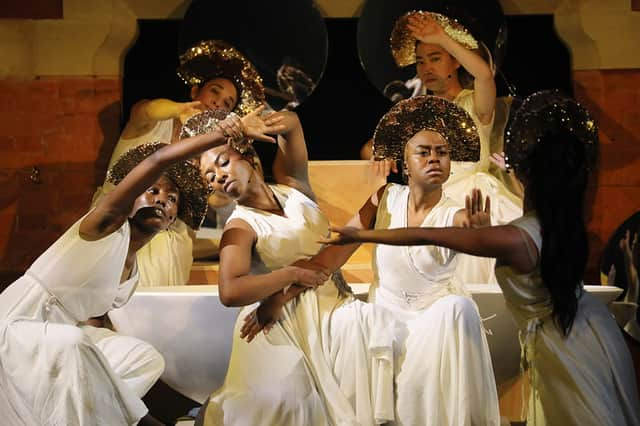
Creative accessibility is embedded into Ecstasy of the Virtues from its foundation rather than applied as a late addition.
The staging integrates Theatrical British Sign Language, creative captions, a relaxed performance atmosphere, and a cast featuring Deaf performance artist Chisato Minamimura.
For Nwando, embedding accessibility creates a richer artistic tapestry. However, she remains candid about the wider struggles facing neurodivergent and disabled creatives within the UK cultural sector.
"There is a lot of shadow around accessibility and disability," Nwando reveals. "I have lost jobs because I was upfront in talking about my own access needs. Organisations feel it is not their job to create work for Deaf or Blind communities. People within organisations keep quiet about their own hidden disabilities, and sometimes those same people expect others to do the same.
“The more we can accept difference, the stronger our art world will be."
As Ecstasy of the Virtues prepares for its Leeds showcase, Nwando holds a simple wish for those stepping into the Howard Assembly Room.
"I hope they leave feeling changed."
Commissioned and produced by Mahogany Opera, Ecstasy of the Virtues takes place at the Howard Assembly Room in Leeds (in partnership with Opera North), with performances at 2:30pm and 7:30pm, on October 3. For full details and tickets, visit Opera North’s official website.