
'Less is more': Writer Dr Shabnam Ahsan on West Yorkshire folklore, ghost stories and building Gothic dread

Ahead of her workshop at the Ilkley Literature Festival, author and academic Dr Shabnam Ahsan explores why we remain captivated by ghost stories, how West Yorkshire’s landscape inspires Gothic tales, and the subtle art of building quiet, lingering fear
As the nights draw in and the temperature drops, there remains a timeless, almost nostalgic comfort in gathering to hear stories that send a shiver down the spine.
From moorland phantoms to centuries-old folklore passed down through generations, ghost stories have long served as a way to peek into the unknown and keep local histories alive.
Ahead of her upcoming creative writing session at the Ilkley Literature Festival, local author and academic Dr Shabnam Ahsan believes our fascination with the supernatural is less about being terrified and more about exploring what lies beyond our everyday understanding.
"I think there’s something comforting, even nostalgic, about listening to or reading stories that give you the chills when it’s turning darker and colder outside," Dr Ahsan explains. "Not to be terrified out of our minds, but to just get a shiver down the spine. “
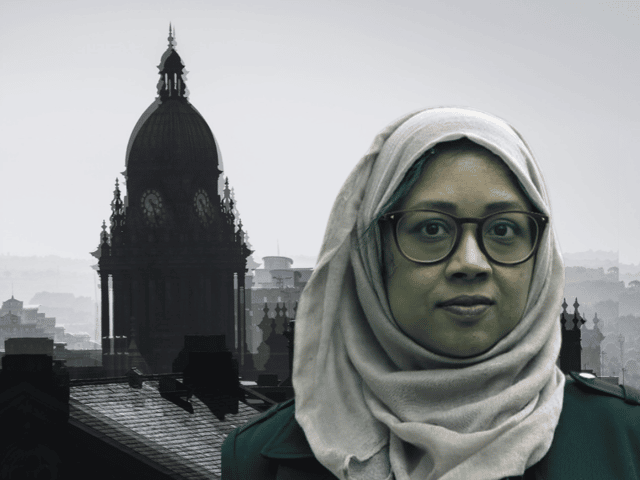

Dr Ahsan continued: It’s a safe way to think about the boundaries of human existence. In this age of certainty, we have centuries of information at our fingertips, but not knowing something for certain opens up space for possibilities.
“People like feeling that there are some things we can’t explain."
For Dr Ahsan, local folklore offers something that historical textbooks often miss: a human connection to the people who walked these streets before us.
"Keeping alive the stories of people who lived and worked in the same places we do now is another way of being connected to a past, and to a place," she says. "And sometimes, it’s a way of giving a voice to figures who perhaps have no voice in history books, by imagining what might have happened to them or how they felt."
The Art of Ominous Dread
In an era where modern horror cinema frequently relies on visceral shocks, high body counts, and extreme gore, traditional ghost storytelling reclaims a much quieter, more insidious form of fear.
According to Dr Ahsan, true Gothic dread relies on the familiar turning subtly unfamiliar.
"With ghost stories, it is all about building that sense of unease and dread," Dr Ahsan explains. "It’s the small details which aren’t so frightening in themselves, but when you put them together they can be extremely unsettling: an object moved from where you could have sworn you put it, an unexpected word spoken, or a flash of movement in your peripheral vision.
“Always with that ambiguous element of, 'did I really see or hear that?'"
Drawing on literary masters like Shirley Jackson and M.R. James, Dr Ahsan highlights that what remains unseen is often far more terrifying than any monster explicitly revealed on screen.
When asked for the single most important rule for aspiring horror writers looking to build tension without cheap jump-scares, her advice is remarkably simple: "You don’t have to say or describe everything. Less is more."
Where Heritage Meets Memory
Dr Ahsan’s academic research digs deeply into South Asian fairy tales, diaspora identities, and postcolonial Gothic themes.
In her work and workshops, she encourages writers to weave together established cultural folklore with their own deeply personal family memories.
"Cultural folklore gives us a shared language and shared associations to draw on," Dr Ahsan says. "For example, every town or city with an old stately home probably has a legend of a 'white lady' haunting it - East Riddlesden Hall in Keighley has its own Grey Lady legend.
“But White Lady ghosts also exist in other cultures. In Mexico they call her La Llorona, and in Japanese folklore, yurei are frequently depicted in white burial robes. When you write about a ghostly figure in white, you are drawing on all those collective associations."
While British and South Asian ghost stories share a focus on everyday people brushing up against the veil of the unseen, the nature of the entities differs significantly.
"The term 'ghost' itself is hard to translate because every culture has its own types of spirit," Dr Ahsan explains. "In cultures that believe in reincarnation, a spirit might be perceived as stuck and needing help to move on. In Muslim societies, you’re less likely to find the idea of a dead person’s soul coming back, and more likely to find stories of jinn or other supernatural entities in their own right.
“But what they all have in common is that sense of another world or dimension that we can’t see, offering that same frisson of fear."
West Yorkshire's Gothic Landscape
It is no coincidence that West Yorkshire has long been a hotbed for supernatural lore and atmospheric writing.
Between layers of ancient history and vast, sweeping landscapes, the region offers the ultimate backdrop for haunting tales.
"There is so much built history here: ancient stone circles, Roman forts, Viking settlements, Norman castles, and mills of the Industrial Revolution - all of which provide scope for so many kinds of hauntings," Dr Ahsan says.
"In more recent history, different demographics settling here have formed their own particular memories, which are a very rich but often overlooked source of stories."
"Plus, we’re extremely fortunate to live somewhere with such beautiful countryside, where you can go for a walk on the moors and pretend you’re Cathy’s ghost looking for Heathcliff for all eternity.
“If that’s not conducive to making up your own ghost stories, I don’t know what is!"
Dr Shabnam Ahsan will be hosting a writing workshop, Writing Ghost Stories, at the Ilkley Literature Festival on October 18 at 10am. Tickets are available through the official Ilkley Literature Festival website.